
I’ve always been someone who struggles with staying full between meals. No matter how careful I am about eating on time, there were days when I’d finish lunch and within an hour, I’d be reaching for whatever snack I could find—usually something quick, convenient, and not very healthy.
Over time, I realized that the key wasn’t just eating “enough” but eating the right kind of meals that actually keep my hunger under control.
That’s when I started focusing on high-fiber, high-protein meals, and honestly, it changed the way I approach eating entirely.
At first, I thought high-protein meant just piling my plate with chicken or eggs and that fiber meant a boring heap of vegetables I wasn’t excited about. But as I experimented,
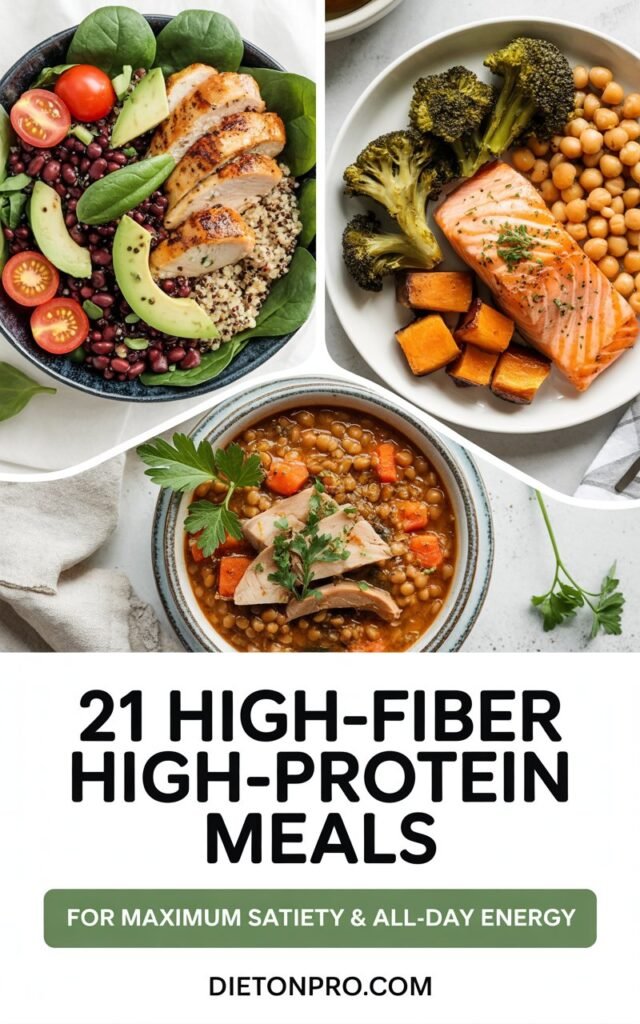
I learned that you can combine the two in ways that are filling, satisfying, and actually enjoyable to eat.
There’s something powerful about a meal that keeps you full for hours, stabilizes your energy, and even helps you avoid those mindless snack attacks.
I started noticing that when I incorporated both protein and fiber into my meals, I had more energy, my cravings reduced drastically, and I felt in control of my eating rather than letting hunger control me.
Over the years, I’ve tried countless combinations—some worked, some didn’t—but eventually I found meals that hit the perfect balance.
These are meals that aren’t just about nutrition; they’re about practicality, flavor, and long-term satisfaction.

From breakfasts that power me through busy mornings to dinners that leave me feeling content without being heavy, high-fiber and high-protein meals have become a cornerstone of my routine.
In this post, I want to share exactly what I’ve learned, including my favorite meal ideas, why they work, and how you can make them a part of your daily routine.
These aren’t just theoretical suggestions—they’re meals I’ve cooked, eaten, and relied on personally to stay full, focused, and satisfied throughout the day.
By the end, you’ll have a toolbox of meal ideas that not only nourish your body but also keep hunger at bay in the most natural, effective way possible.
How to Look for High-Protein Meals
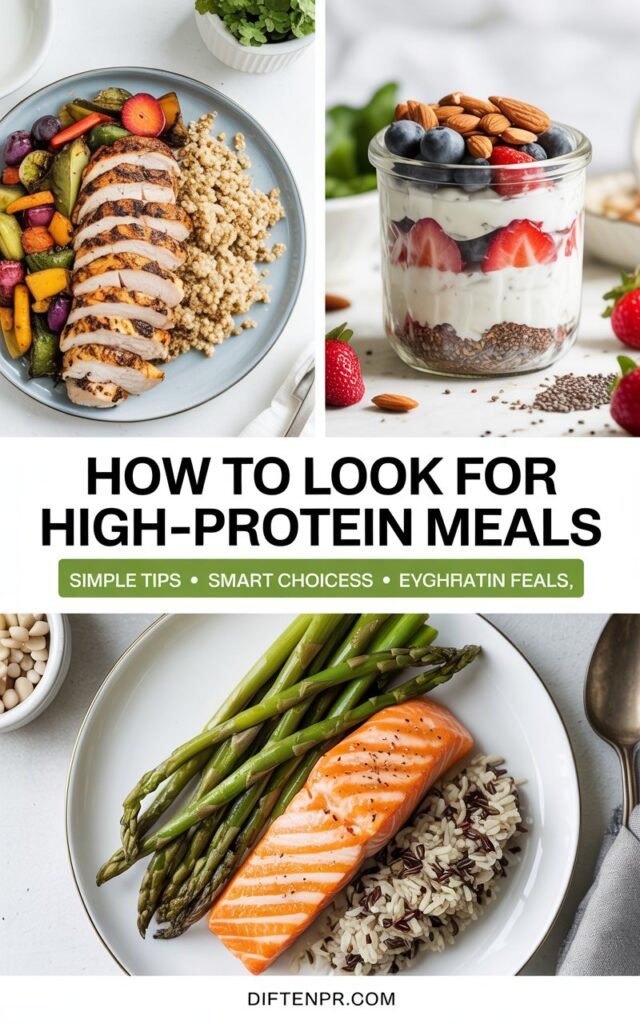
When I first started focusing on high-protein meals, I realized that finding the right options wasn’t always obvious. Protein comes in so many forms, and not every option works the same way for satiety, taste, or convenience.
Over time, I learned a few simple strategies that make identifying high-protein meals much easier—and honestly, they’ve saved me from a lot of trial and error in the kitchen.
The first thing I do is look at the main protein source. For me, this usually means lean meats like chicken, turkey, or fish, eggs, Greek yogurt, or plant-based options like lentils, chickpeas, tofu, and tempeh.
I’ve found that meals centered around these ingredients naturally deliver a solid protein punch without making me feel weighed down.
I also pay attention to portion size—a chicken breast might seem small on the plate, but it packs a lot more protein than you might expect, especially compared to processed alternatives.
Next, I check the whole meal, not just the protein item. A meal can have a protein-rich main, but if it’s loaded with refined carbs or low-fiber ingredients, I end up hungry soon after eating.
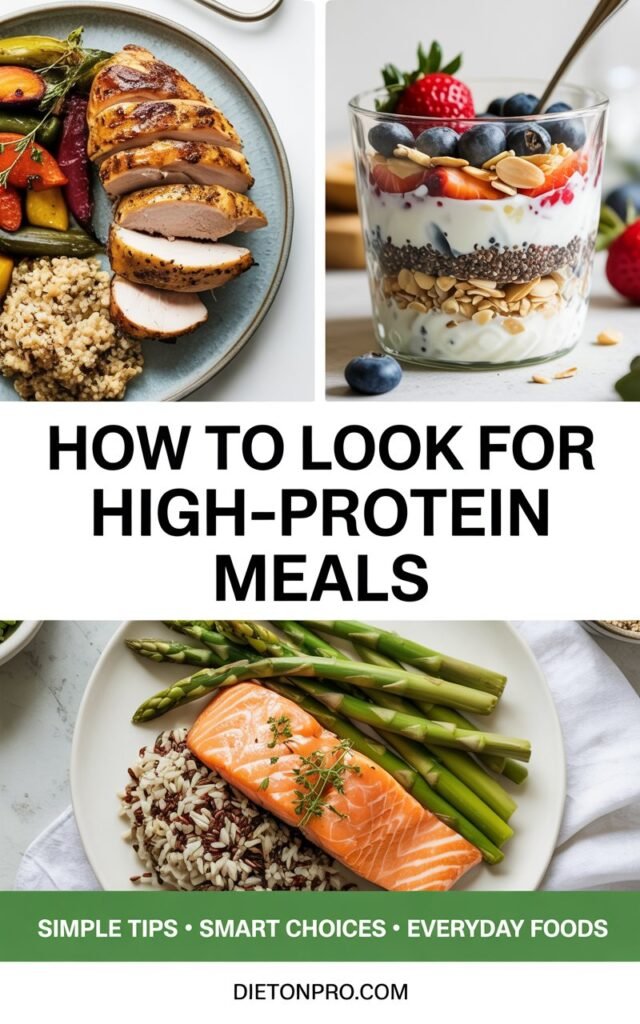
That’s where fiber comes in. Adding beans, lentils, whole grains like quinoa or brown rice, and plenty of vegetables helps the protein do its job better, keeping me full longer.
When I’m out at restaurants or trying pre-made meals, I’ve learned to scan nutrition labels carefully. I look for meals with at least 20 grams of protein per serving, which seems to be the sweet spot for keeping me satisfied.
For packaged or frozen meals, I also check the fiber content—aiming for at least 5 grams per serving—and avoid options that are high in added sugar or refined carbs.
Lastly, I’ve learned not to overcomplicate it. Sometimes, a simple combination of scrambled eggs with black beans, a scoop of Greek yogurt with chia seeds, or grilled chicken with roasted vegetables hits all the right notes without needing a complicated recipe.
High-protein meals don’t have to be fancy—they just need the right balance of ingredients that work for your body and your schedule.
By using these strategies, I’ve been able to build a collection of meals that are consistently filling, flavorful, and practical—meals that don’t just satisfy my hunger but also keep me energized for the long run.
1. High-Fiber, High-Protein Meals
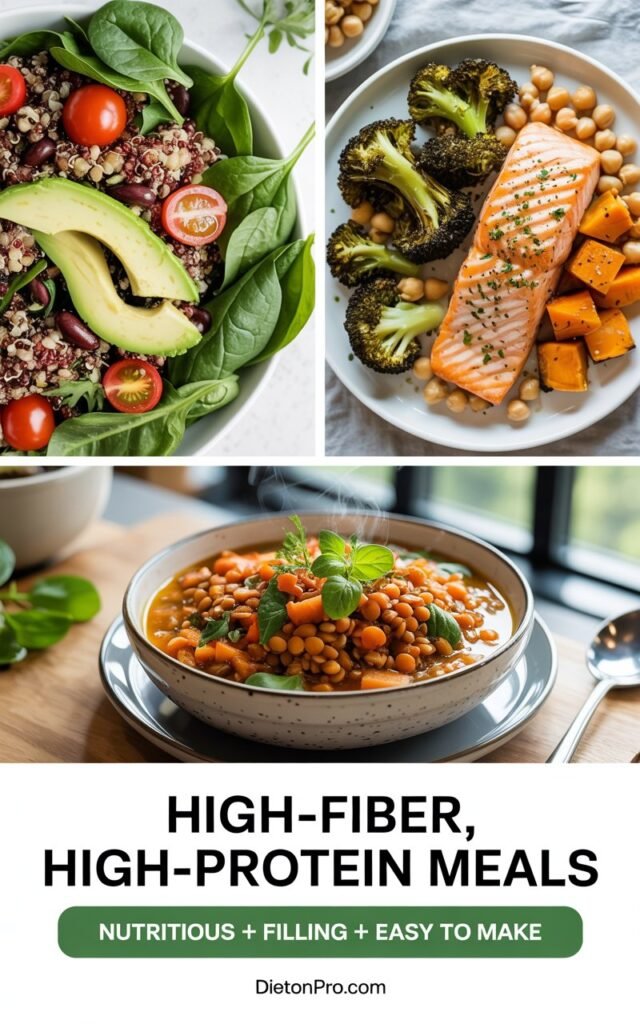
Over the years, I’ve realized that the meals that keep me truly full are the ones that combine both fiber and protein in the right amounts.
I’ve tried plenty of “healthy” meals that promised to satisfy, but I would still feel hungry within an hour.
The meals that actually work for me have one thing in common: they’re built around ingredients that fuel my body and keep my appetite in check.
For breakfast, I often start with a bowl of Greek yogurt mixed with oats, chia seeds, and berries. The Greek yogurt provides a dense source of protein, while the oats and chia seeds add fiber and texture.
I’ve noticed that this combination keeps me full until lunchtime, which is a huge difference from just having cereal or toast. Another favorite morning option is scrambled eggs with black beans, spinach, and avocado.
The eggs give me protein, the beans add fiber, and the avocado brings healthy fats that slow digestion and keep me satisfied for hours.
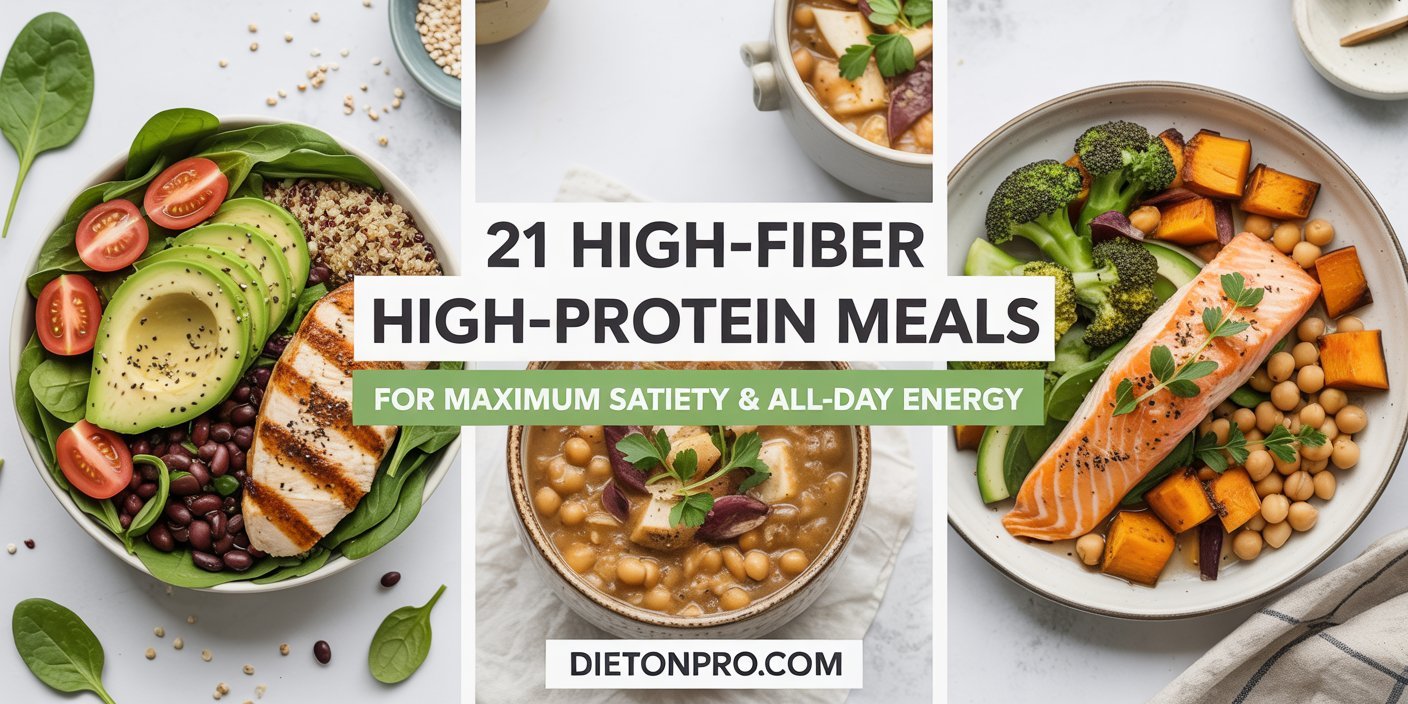
For lunch or dinner, I usually focus on lean meats or plant-based proteins paired with high-fiber sides. A simple example is grilled chicken with quinoa, roasted vegetables, and a handful of lentils or chickpeas.
Quinoa and legumes are both packed with fiber and protein, making them a powerhouse combination. I also love salmon with a side of roasted broccoli and sweet potato.
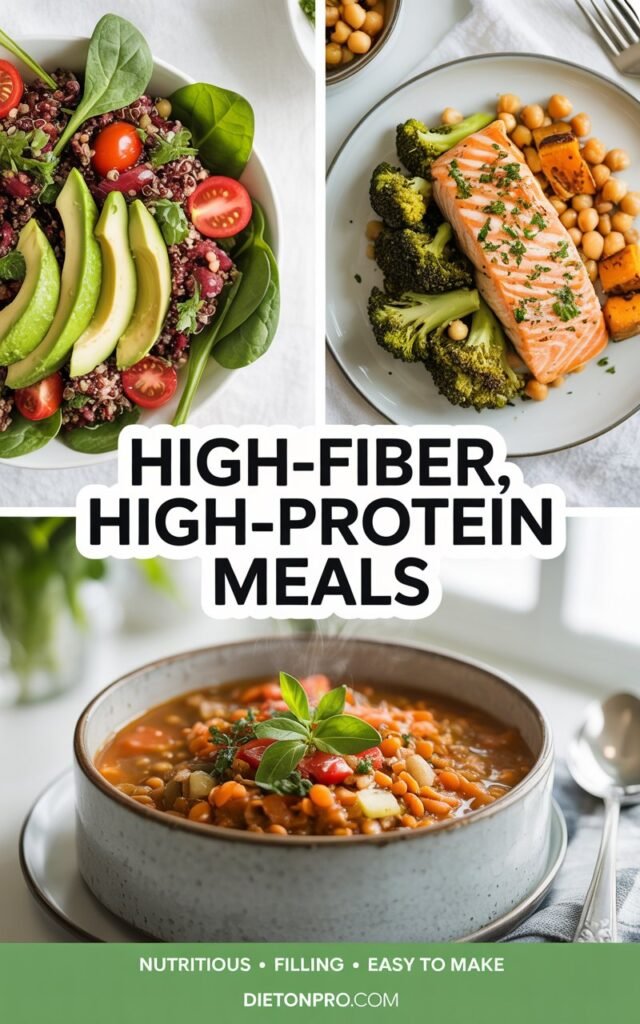
The salmon gives me protein and healthy omega-3 fats, while the broccoli and sweet potato provide fiber and slow-burning carbohydrates.
I’ve found that these meals aren’t just filling—they’re also practical and easy to prepare. I don’t have to spend hours in the kitchen, and I can adjust portion sizes based on how hungry I feel.
Over time, this approach has helped me avoid unnecessary snacking, maintain steady energy levels throughout the day, and feel satisfied after every meal.
The key takeaway from my experience is that the combination of fiber and protein is non-negotiable if you want maximum satiety.
Meals that include both aren’t just more filling—they also help your body stay energized, keep cravings in check, and make healthy eating feel simple and sustainable.
2. High-Protein and High-Fiber Meals for Weight Loss
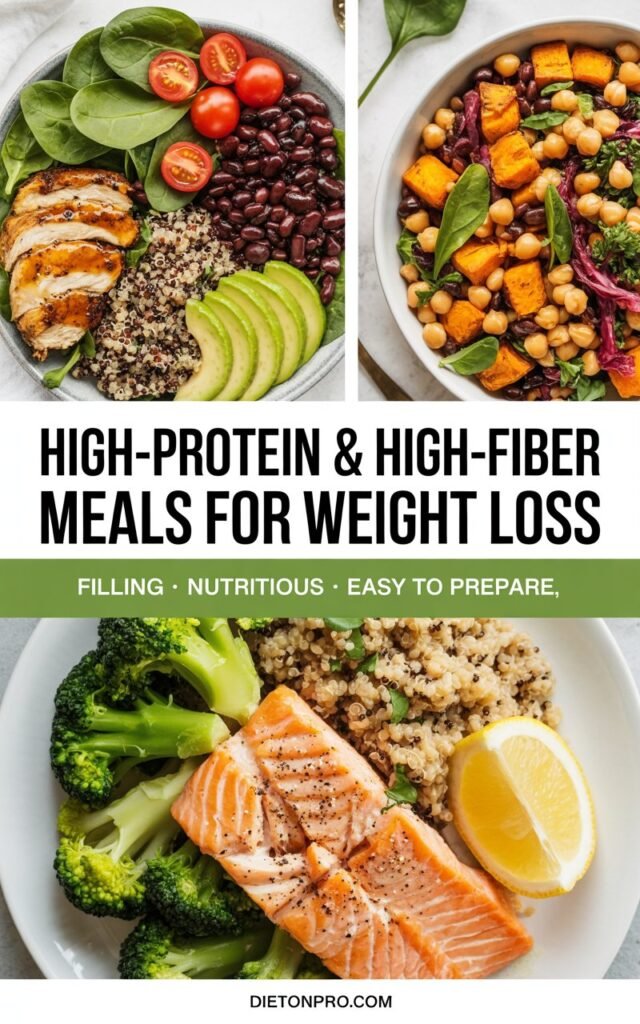
When I first started trying to lose weight, I quickly realized that it wasn’t just about cutting calories—it was about eating the right kinds of meals that actually kept me full and stopped me from reaching for snacks.
That’s when I really started focusing on meals that combine both high protein and high fiber.
From my experience, these meals are game-changers for weight loss because they naturally reduce hunger, stabilize energy, and help control portions without feeling deprived.
For breakfast, one of my go-to meals is an egg white omelet loaded with spinach, mushrooms, and black beans.
The egg whites provide lean protein without extra fat, while the vegetables and beans give me fiber that keeps me full for hours.
Another breakfast I love is a smoothie made with Greek yogurt, frozen berries, chia seeds, and a small scoop of protein powder.
It’s quick, satisfying, and easy to drink on busy mornings, but it also delivers both protein and fiber in a way that keeps my cravings under control.
Lunches that work best for me usually revolve around lean meats or plant-based proteins paired with fibrous vegetables or whole grains.
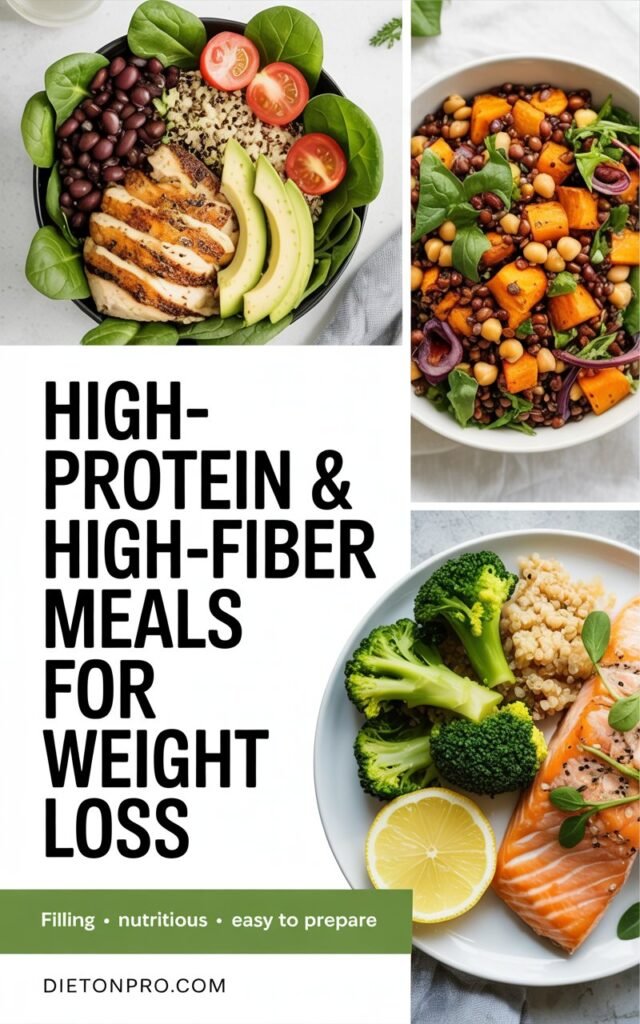
For example, grilled chicken or turkey breast with quinoa, broccoli, and lentils is one of my favorite combinations.
Quinoa and lentils are rich in both protein and fiber, and they make the meal filling without adding empty calories.
I also enjoy large salads topped with grilled salmon, chickpeas, and avocado. The fiber from the greens and chickpeas combined with the protein from the salmon leaves me full and satisfied, yet it’s low in calories and perfect for weight loss.
For dinner, I stick to meals that are high in protein but also packed with vegetables. One of my staples is baked cod or tilapia with roasted Brussels sprouts, zucchini, and a side of black beans.
It’s simple to prepare, flavorful, and hitting both protein and fiber means I rarely feel the urge to snack later in the evening.
Another option I often make is a stir-fry with tofu or shrimp, mixed vegetables, and a small serving of brown rice.
I season it with spices and herbs, so it’s satisfying, but the combination of protein and fiber keeps me full and helps me avoid overeating.
What I’ve learned from my experience is that meals like these make weight loss far more manageable.
You’re not just counting calories—you’re giving your body the nutrients it needs while naturally controlling hunger.
High-protein, high-fiber meals make it easier to stick to a plan, maintain steady energy, and feel satisfied at the end of the day without the constant temptation of snacks or processed foods.
3. High-Fiber Breakfast Foods for Adults
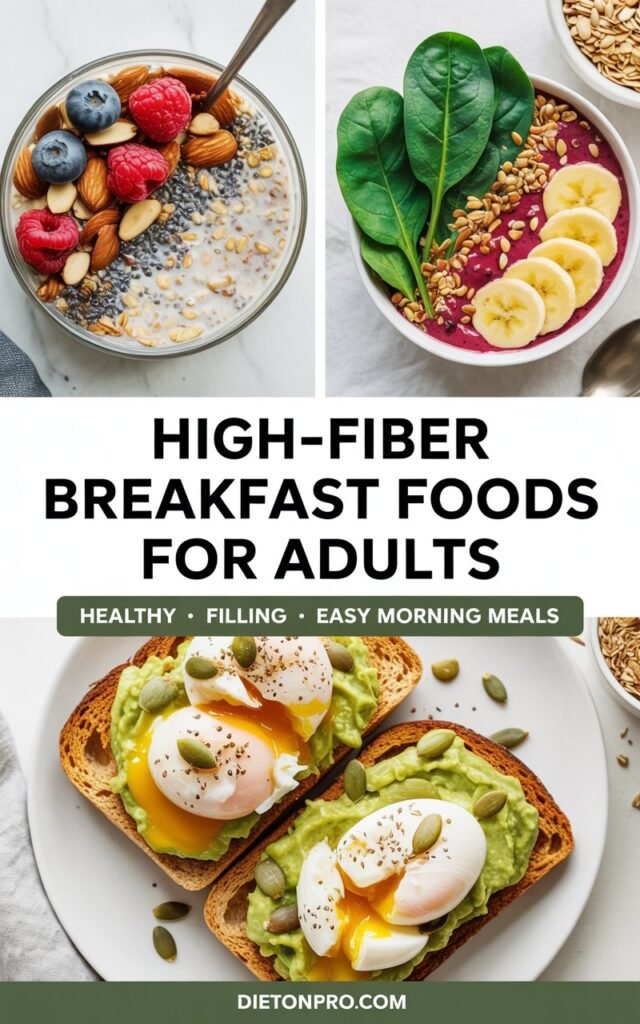
Breakfast has always been a tricky meal for me. I used to either skip it entirely or grab something quick that left me starving within an hour.
Over time, I learned that the key to starting the day feeling full and energized is fiber. High-fiber breakfasts slow digestion, keep blood sugar stable, and give me the energy to stay focused without constant snacking.
One of my favorite go-to breakfasts is oatmeal with berries and chia seeds. The oats are naturally high in soluble fiber, which slows down digestion and helps me feel satisfied, while chia seeds add an extra boost of fiber along with protein and healthy fats.
I usually add a spoonful of almond butter or a handful of nuts to make it more filling, which helps me stay full until lunch.
I also love smoothies that are packed with fibrous ingredients. For example, blending Greek yogurt with frozen spinach, berries, half a banana, and a tablespoon of flaxseeds creates a creamy, nutrient-rich breakfast that keeps me full for hours.
The fruit adds natural sweetness, the spinach adds fiber without overpowering flavor, and the flaxseeds are an easy way to boost both fiber and healthy omega-3 fats.
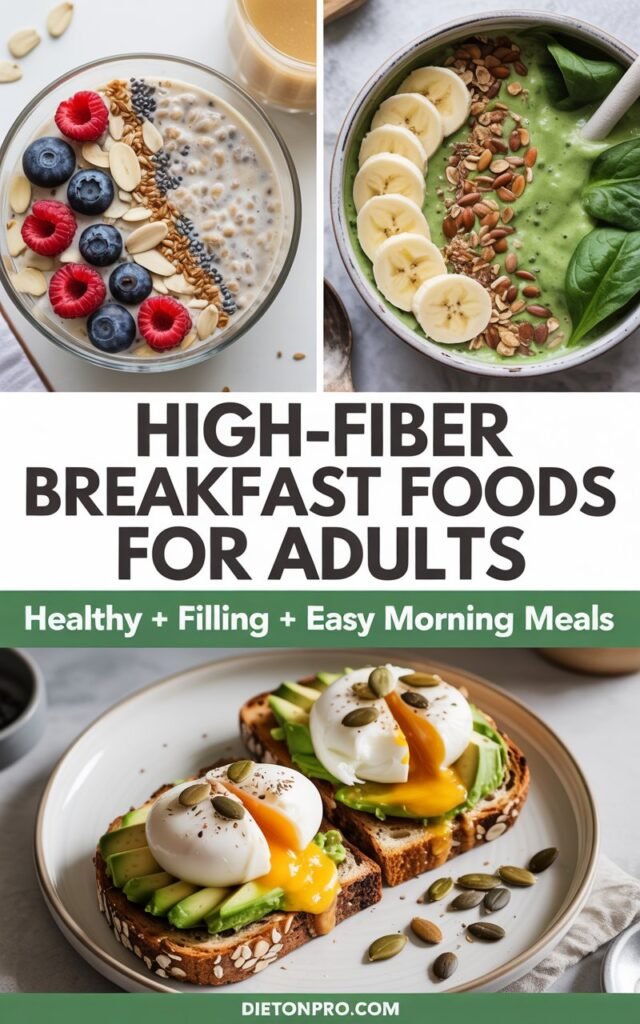
Another high-fiber option I rely on is whole-grain toast topped with avocado and a poached egg.
Whole-grain bread provides a good dose of fiber, while avocado adds healthy fats, and the egg adds protein. Together, they create a balanced meal that is both satisfying and practical, especially on busy mornings.
For adults who prefer savory breakfasts, I often make a vegetable and black bean scramble.
Eggs or egg whites with sautéed bell peppers, onions, spinach, and black beans deliver a hearty mix of fiber and protein that keeps me feeling full without being heavy.
I’ve found that incorporating beans into breakfast is a simple trick that drastically improves satiety compared to typical low-fiber morning meals.
From my experience, the secret to a high-fiber breakfast is variety and balance. I try to combine whole grains, fruits or vegetables, and a good protein source to make a meal that’s satisfying, nutritious, and sets the tone for the rest of the day.
Skipping fiber at breakfast is something I’ve learned to avoid because it’s the one meal that can either make or break my energy and hunger for the entire morning.
Final Thoughts
From my personal experience, incorporating high-fiber and high-protein meals into your daily routine has been a complete game-changer.
These meals not only keep hunger under control, but they also stabilize energy levels, improve digestion, and make healthy eating feel practical and enjoyable.
Whether you’re trying to lose weight, maintain a healthy lifestyle, or simply feel fuller throughout the day, combining fiber and protein in your meals is the most reliable strategy I’ve found.
Remember, everyone’s body reacts differently, so it’s important to experiment with what works best for you.
While these tips have worked wonders for me, I’m not a doctor, and if you have any health complications or chronic conditions, it’s always safest to consult a healthcare professional before making major dietary changes.
By focusing on meals that include lean proteins, legumes, whole grains, fruits, and vegetables, you can create a routine that naturally keeps you full, energized, and satisfied without constantly reaching for snacks or processed foods.
Frequently Asked Questions (FAQ)
Q1: Can high-fiber, high-protein meals help with weight loss?
Yes. Meals high in fiber and protein help reduce hunger and control portions naturally, which can support weight loss over time when combined with a balanced diet and regular activity.
Q2: Are these meals suitable for people with diabetes?
High-fiber, high-protein meals can help stabilize blood sugar levels, but it’s important to monitor individual reactions and consult your doctor for personalized advice.
Q3: How can I increase fiber without feeling bloated?
Start gradually and drink plenty of water. Slowly introducing fiber-rich foods like beans, oats, fruits, and vegetables allows your digestive system to adjust.
Q4: Can I follow these meals if I’m vegetarian or vegan?
Absolutely. Focus on plant-based proteins like lentils, chickpeas, tofu, tempeh, quinoa, and nuts while pairing them with fiber-rich vegetables, fruits, and whole grains.
Q5: How often should I eat high-fiber, high-protein meals?
Ideally, every main meal—breakfast, lunch, and dinner—should include both protein and fiber to maintain fullness and energy throughout the day.