
Christmas has always been a tricky time for me when it comes to eating. I love the smells, the colors, and the excitement of preparing a big family meal, but I’ve also learned the hard way that heavy, creamy, or overly rich dishes can leave me feeling sluggish and bloated by the next day.
Over the past few years, I’ve started leaning into the Mediterranean style because it makes the holidays feel lighter, fresher, and way more satisfying without missing out on flavor.
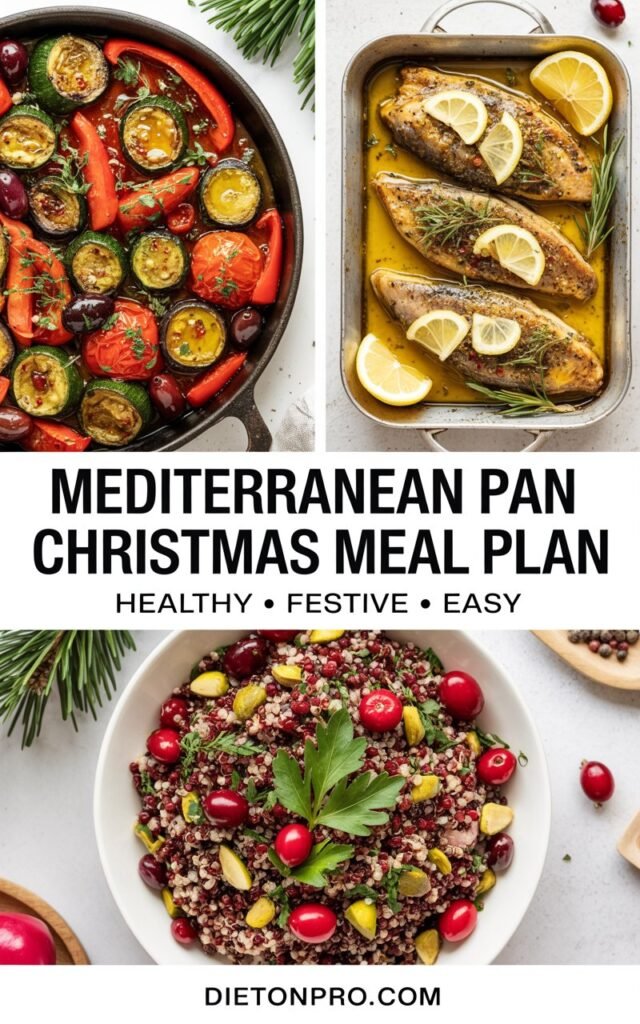
Using a one-pan approach has completely changed my Christmas cooking game. I can cook a main dish, sides, and even some light veggies all in a single pan, which saves me time and cleanup.
But more importantly, it keeps the meals balanced: plenty of lean protein, fresh vegetables, healthy fats, and natural seasonings.
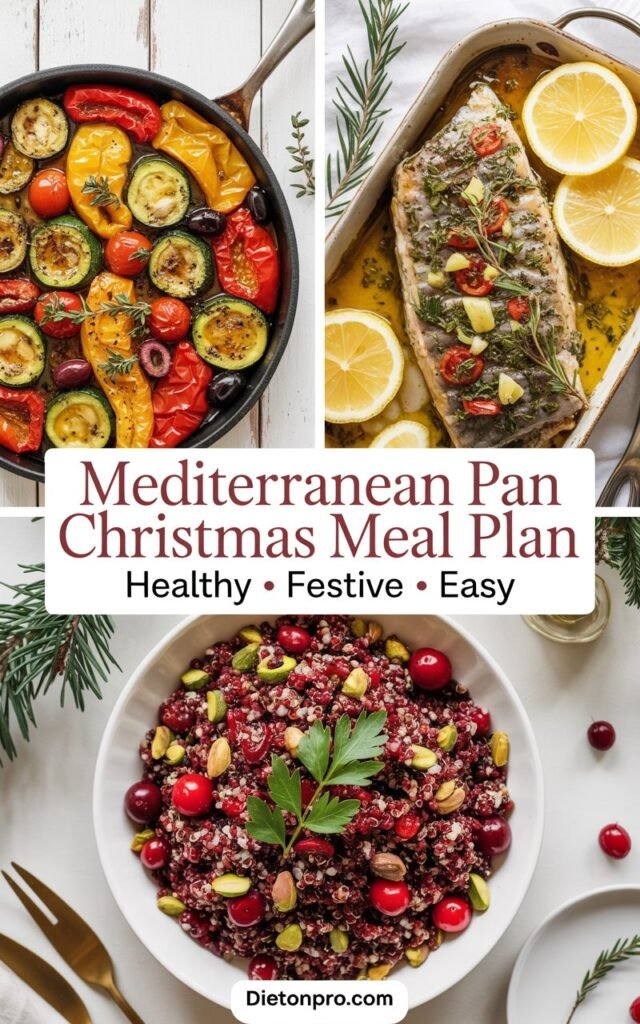
The result is a festive, colorful table that feels indulgent but doesn’t make me regret anything afterward.
This Mediterranean Pan Christmas Meal Plan is exactly how I approach my holiday meals now.
It’s simple, flavorful, and designed to make your Christmas cooking easier while keeping everyone at the table happy, satisfied, and still feeling good about what they’re eating.
Variations I Choose
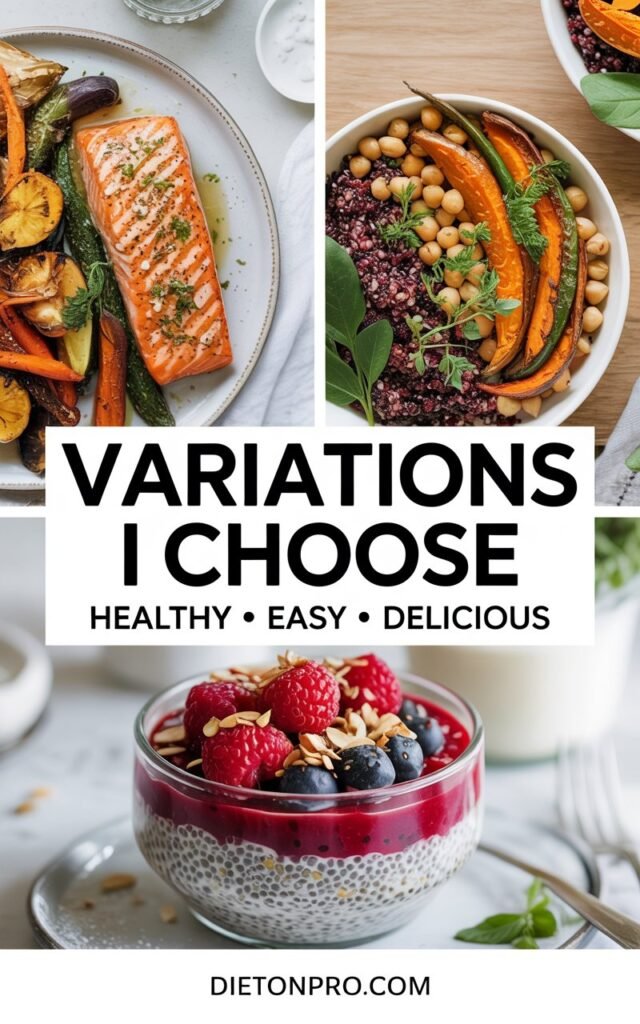
When I plan my Mediterranean Pan Christmas meals, I like to mix things up depending on what feels fresh, seasonal, and flavorful.
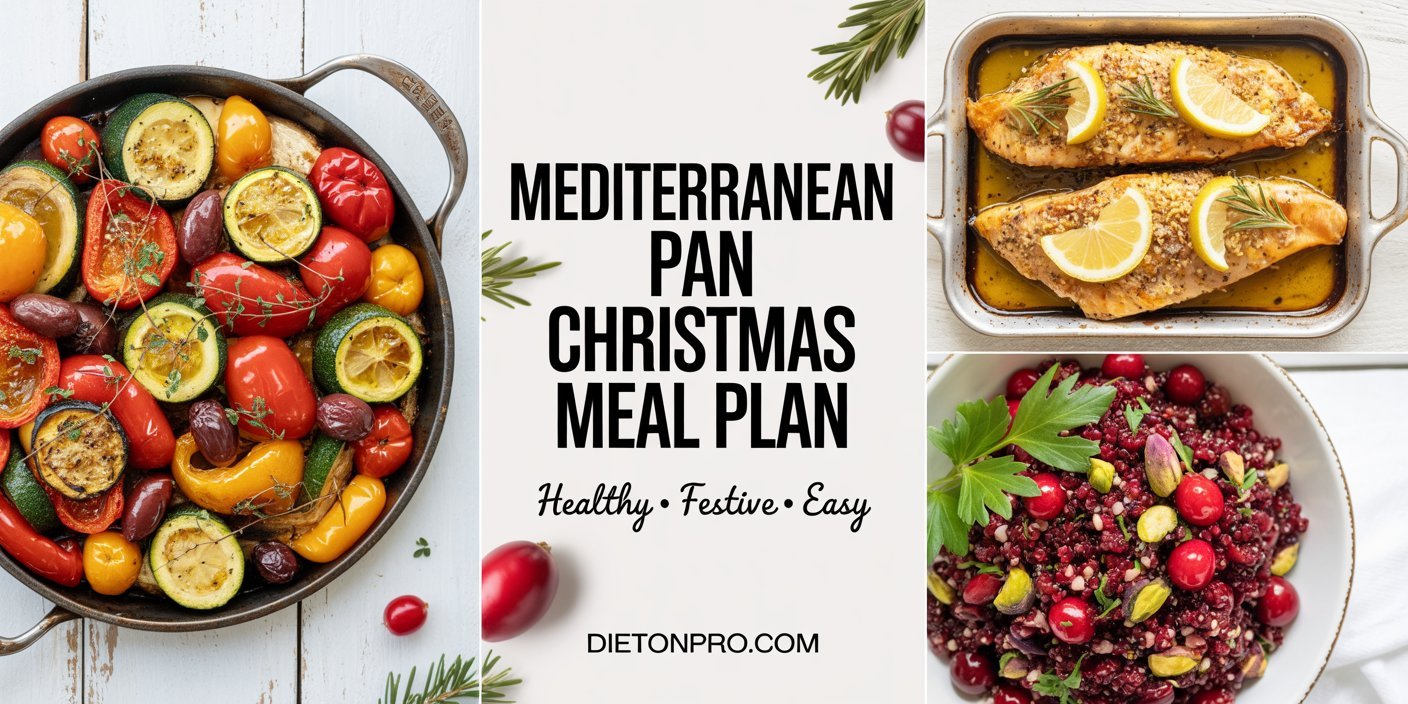
One day, I might go for roasted lemon herb chicken with olives and cherry tomatoes. It’s bright, colorful, and the pan cooks everything together so the flavors meld perfectly.
Another time, I’ll choose salmon with roasted vegetables, zucchini, and bell peppers, which keeps the dish light but festive, and the natural sweetness of the veggies makes it feel like a treat.
I also love adding Mediterranean grain-based variations, like a bed of quinoa, couscous, or farro, tossed with roasted vegetables, chickpeas, and a simple drizzle of olive oil and lemon juice. It adds texture and keeps the meal filling without making it heavy.
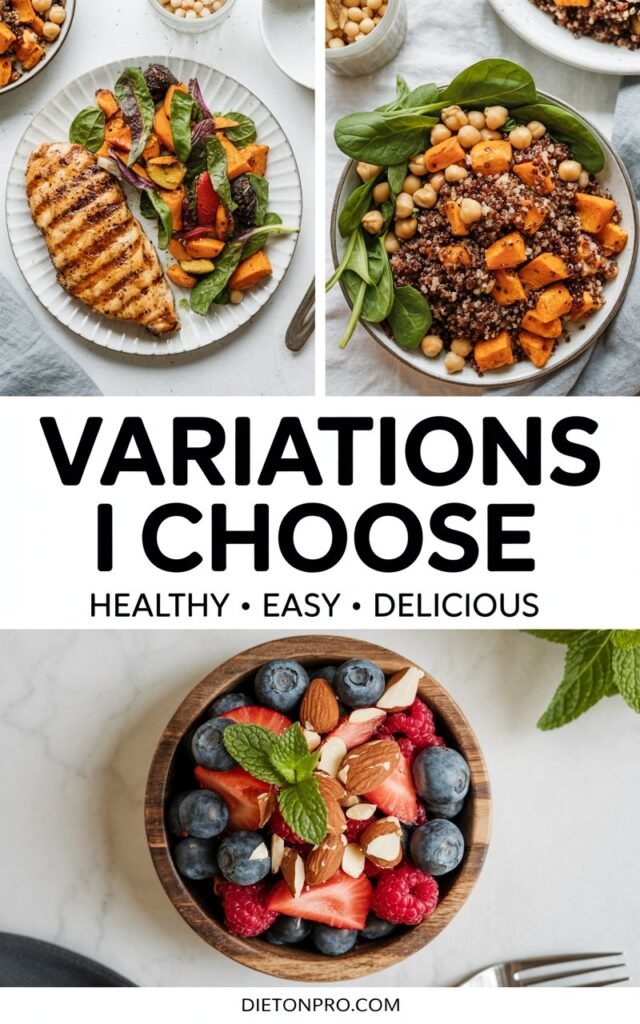
For a plant-forward option, I sometimes swap out the protein for marinated tofu or tempeh with the same roasted vegetables, which still gives that rich, savory flavor that everyone at the table enjoys.
These variations allow me to stick to a single-pan approach while keeping the meals exciting and balanced.
I can tailor each dish to the family’s preferences, seasonal ingredients, or my own cravings, without losing the simplicity and freshness that makes the Mediterranean style so enjoyable at Christmas.
How to Use It for Christmas

Using a Mediterranean pan for Christmas has completely simplified my holiday cooking. I like to think of it as a way to bring all the flavors together in one dish without overcrowding the kitchen or spending hours at the stove.
The key is layering ingredients in the pan so that proteins, vegetables, and grains cook evenly and absorb each other’s flavors.
For example, I’ll place the chicken or salmon on one side, scatter vegetables like cherry tomatoes, zucchini, and bell peppers around it, and finish with olives, lemon slices, and fresh herbs. By the time it’s done, the dish is already beautiful, colorful, and full of holiday aroma.

I usually prep everything the night before—chop the vegetables, season the protein, and set aside any grains or beans—so that on Christmas day, all I have to do is assemble and roast. This not only saves time but also keeps the flavors fresh.
I like serving the pan straight to the table, letting everyone help themselves, which keeps the meal interactive and fun without turning into a buffet where it’s easy to overeat.
For sides, I often pair the pan with a simple leafy salad or a small portion of roasted potatoes. This keeps the plate balanced while letting the main Mediterranean flavors shine.
Using a single pan also makes clean-up easier, which is a lifesaver during a busy holiday. Over time, this method has become my go-to for a stress-free, flavorful, and satisfying Christmas meal.
Top Ingredients I Recommend
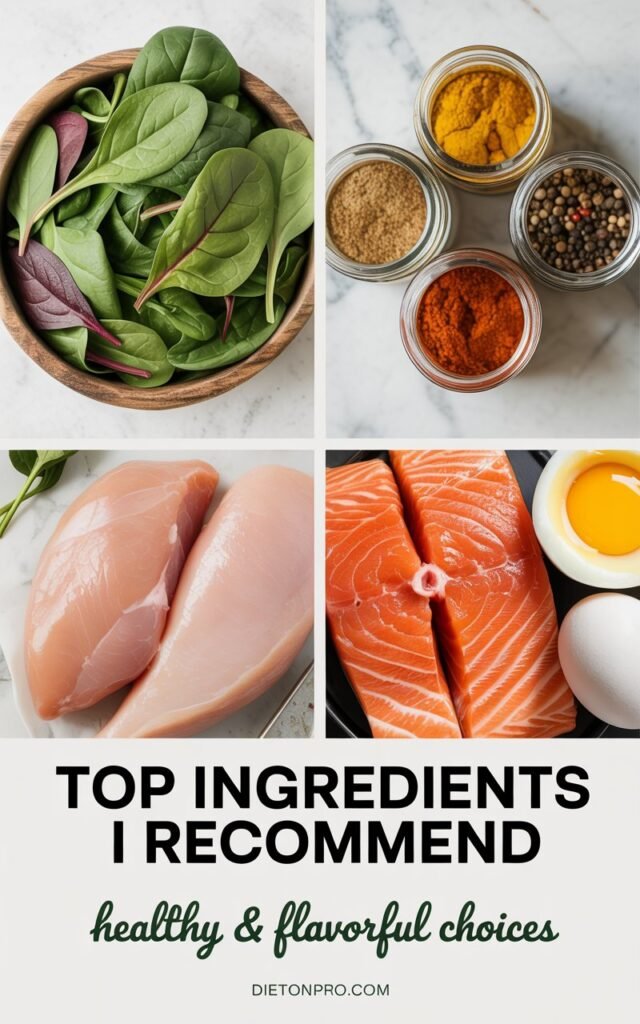
• Olive Oil
The base of almost every Mediterranean dish I make. It brings a rich, smooth flavor and helps all the ingredients cook evenly without being heavy.
• Fresh Herbs (Rosemary, Thyme, Oregano, Parsley)
These are essential for that classic Mediterranean aroma. I always add them near the end or scatter on top before serving for maximum flavor.
• Garlic and Lemon
Fresh garlic and lemon juice are non-negotiable for me. They brighten the dish, balance richness, and make the flavors pop.
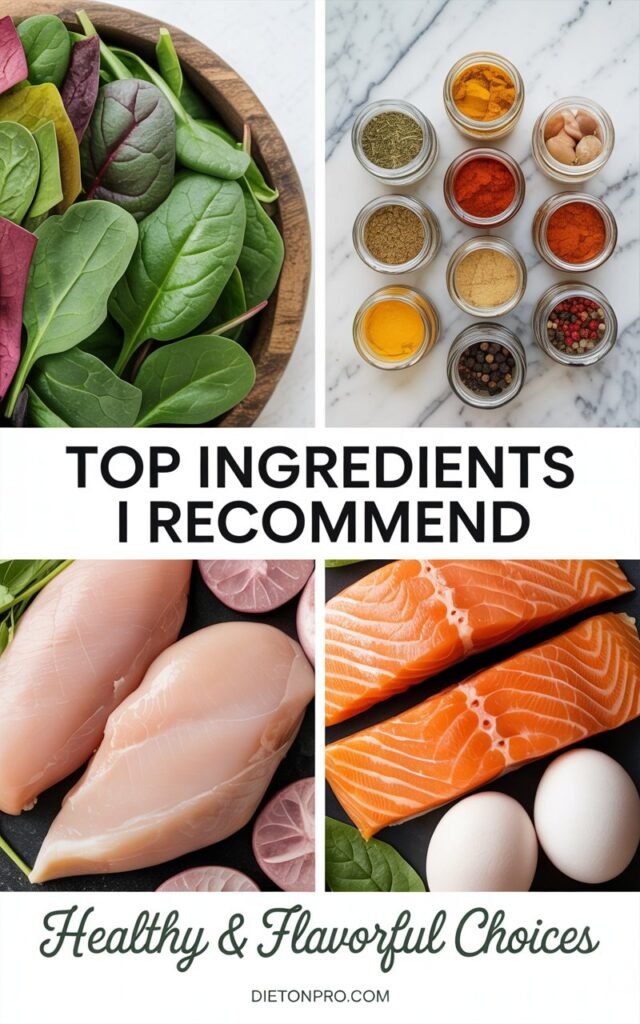
• Cherry Tomatoes and Bell Peppers
These vegetables add natural sweetness, color, and freshness. I like them roasted alongside proteins so they soak up all the flavors.
• Olives and Capers
A small amount adds a salty, tangy punch that instantly makes the dish feel authentic and festive.
• Protein Options (Chicken, Salmon, Turkey, or Tofu)
Choose lean proteins that cook well in the pan. I like alternating between poultry, seafood, or plant-based options depending on the family’s preference.
• Grains (Quinoa, Couscous, or Farro)
These make the meal more filling and give texture without weighing it down. They also absorb the pan flavors beautifully.
• Spices (Paprika, Black Pepper, Chili Flakes)
Just enough to enhance the natural flavors without overpowering the dish. I usually toast spices lightly in the pan for depth.
How I Prepare the Pan
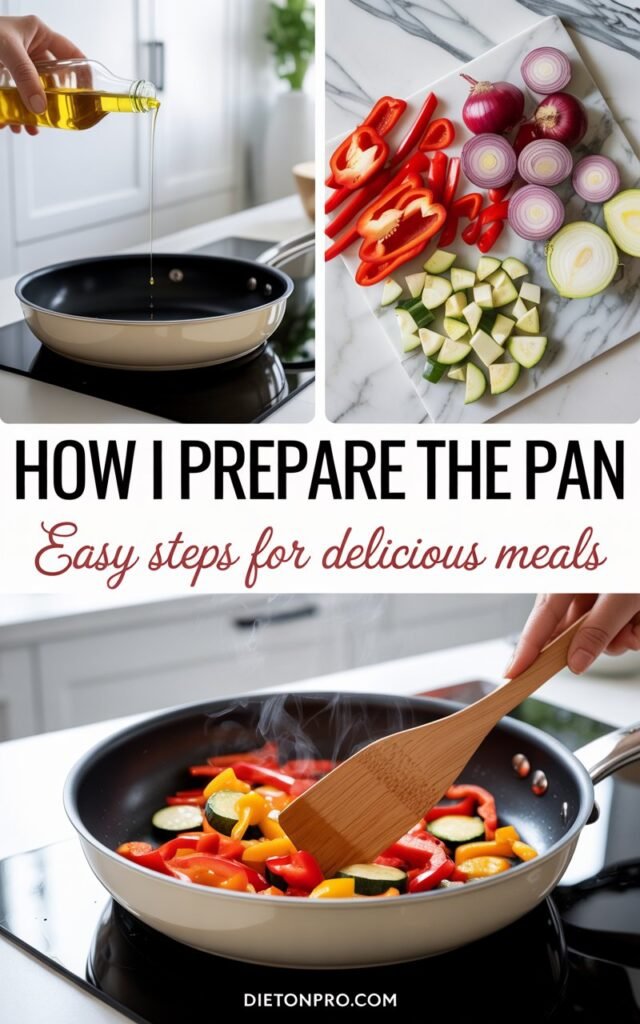
Preparing the pan properly is the key to making everything cook evenly and taste amazing. I start by choosing a pan that’s large enough to hold all the ingredients without overcrowding.
Overcrowding can make the vegetables soggy and prevent proteins from cooking evenly.
I always start by lightly drizzling olive oil on the bottom of the pan and gently heating it. Then I add any aromatics like garlic, onions, or fresh herbs first, letting them warm up for a minute or two to release their flavors.
After that, I layer the proteins—chicken, salmon, or tofu—on one side, making sure there’s a little space around each piece so they roast rather than steam.
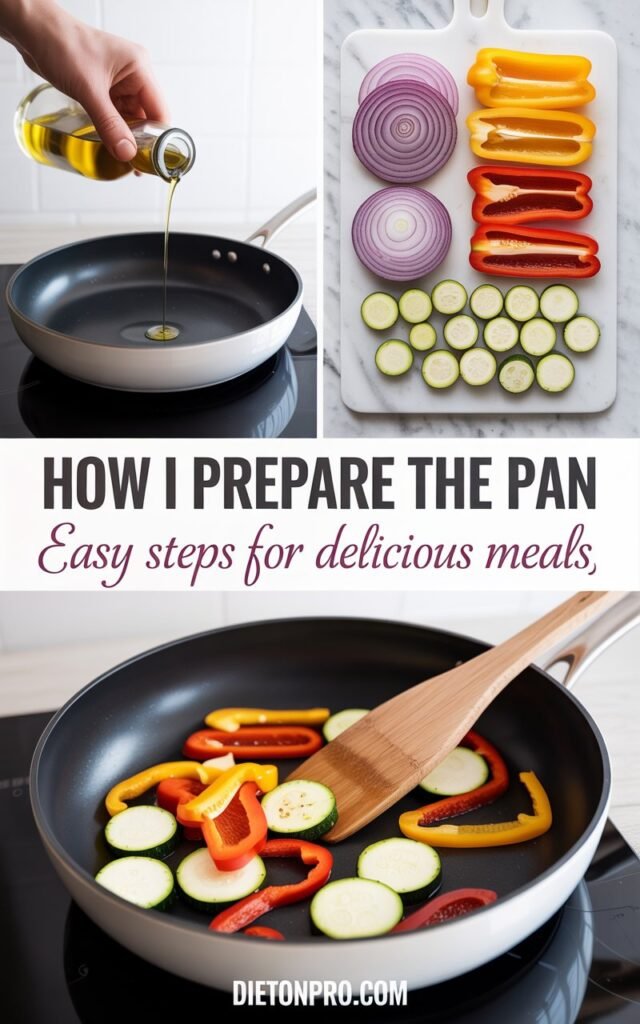
Next, I add the vegetables and grains, keeping in mind cooking times. Harder vegetables like carrots or sweet potatoes go in first, while softer ones like cherry tomatoes or bell peppers go in later so they don’t overcook.
I sprinkle olives, capers, and additional herbs on top, then add a squeeze of lemon or a splash of broth to keep everything moist.
Once everything is in place, I let it roast in the oven, checking occasionally to make sure nothing is burning.
By the time it’s done, the protein is juicy, the vegetables are caramelized, and the grains have absorbed all the natural flavors from the pan.
This method keeps the meal simple, full of flavor, and beautifully presented straight from the oven to the table.
Pro Tips and Cooking Patterns
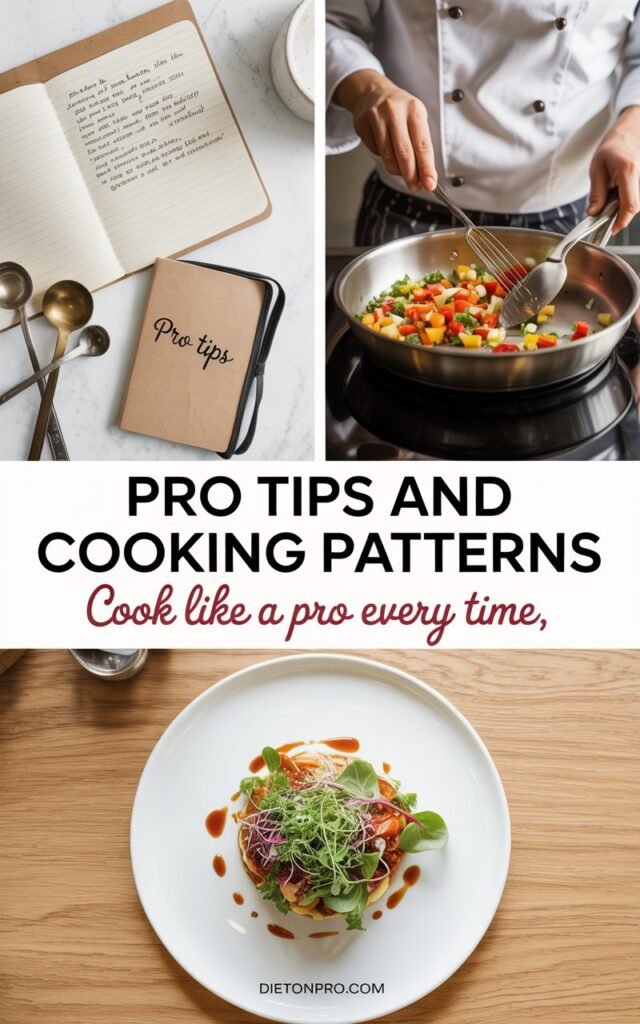
Over time, I’ve learned a few tricks that make Mediterranean pan meals easier, more flavorful, and stress-free, especially during the busy Christmas season. One key tip is layering ingredients by cooking time.
I always place proteins like chicken or salmon first, then harder vegetables like carrots, sweet potatoes, or zucchini, and finally softer items like cherry tomatoes or spinach. This ensures everything finishes perfectly at the same time.
Another pattern I follow is prepping everything the night before. Chopping vegetables, seasoning proteins, and measuring grains ahead of time saves so much stress on the actual day. It allows me to focus on assembly and roasting rather than juggling multiple tasks at once.
I also like to toast spices lightly in olive oil before adding the other ingredients. This small step intensifies flavors and makes the pan aroma irresistible.
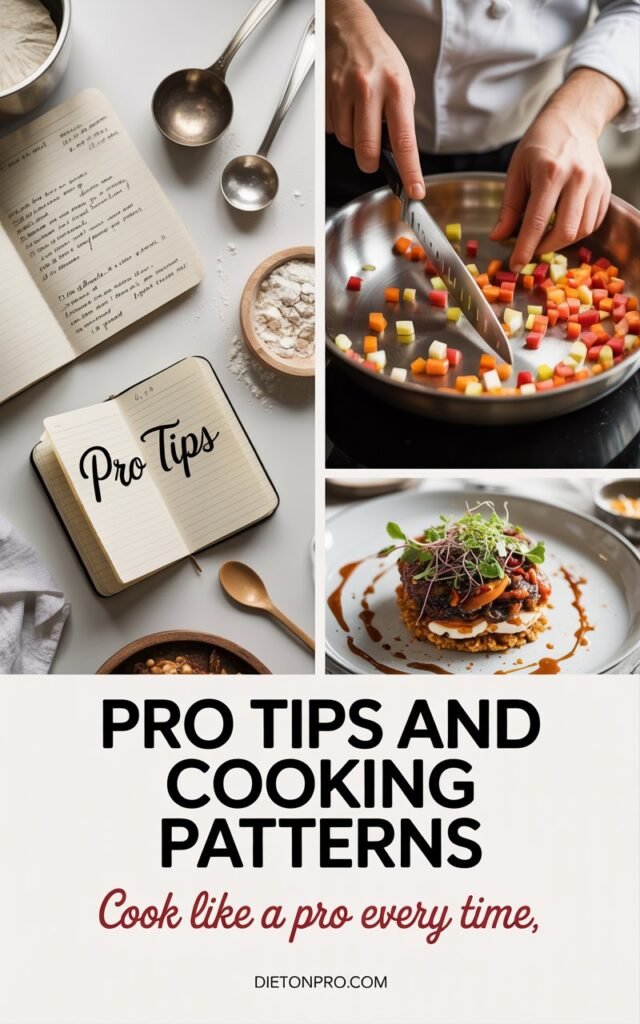
Adding a splash of lemon juice or a drizzle of olive oil at the end brightens the dish and brings all the elements together.
For cooking patterns, I usually roast at a moderate-high temperature—around 375–400°F (190–200°C)—so the vegetables caramelize slightly, and proteins stay juicy.
I keep the pan uncovered for the last 10–15 minutes to give a slightly roasted finish without drying anything out.
Finally, I always let the pan rest for a few minutes after it comes out of the oven. This helps the juices redistribute, making the protein tender and the vegetables flavorful.
Following these tips consistently has made my Mediterranean pan meals my favorite go-to for Christmas: simple, delicious, and stress-free.
Serving Advice and Portion Control
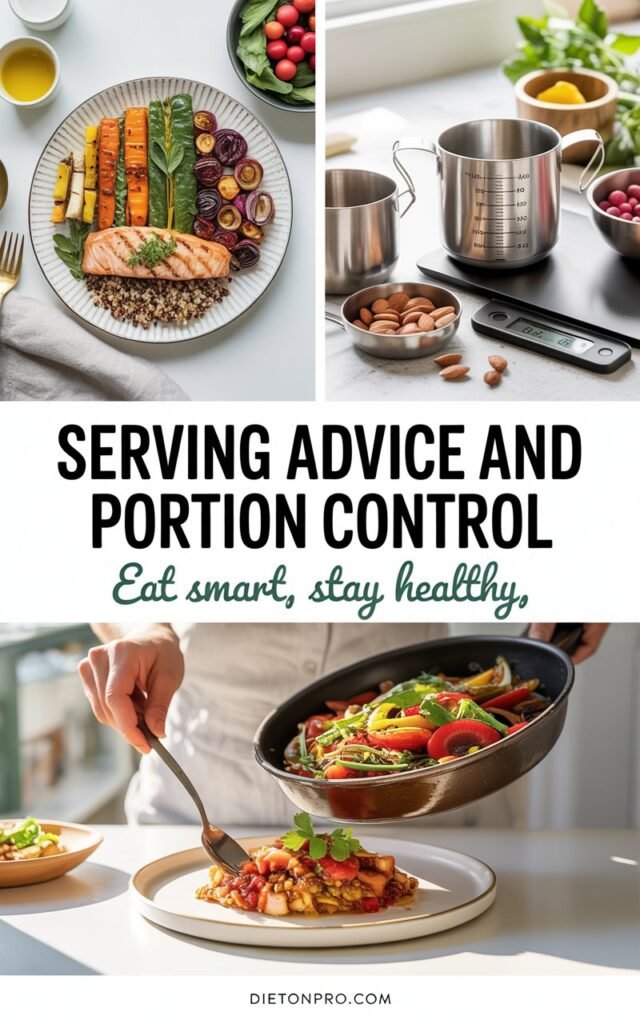
Serving Mediterranean pan meals for Christmas doesn’t have to be complicated, and keeping portions in check is easier than you think.
I usually serve the protein first, then add vegetables and grains around it, creating a balanced plate without overcrowding.
This simple plating method helps me naturally control portions and makes the meal look festive without feeling excessive.
I also like using medium-sized plates or bowls. Giant holiday platters encourage overfilling, while moderate-sized dishes allow you to enjoy the meal fully without taking more than you need.
Another trick I follow is serving straight from the pan, letting everyone take what they want rather than passing multiple dishes.
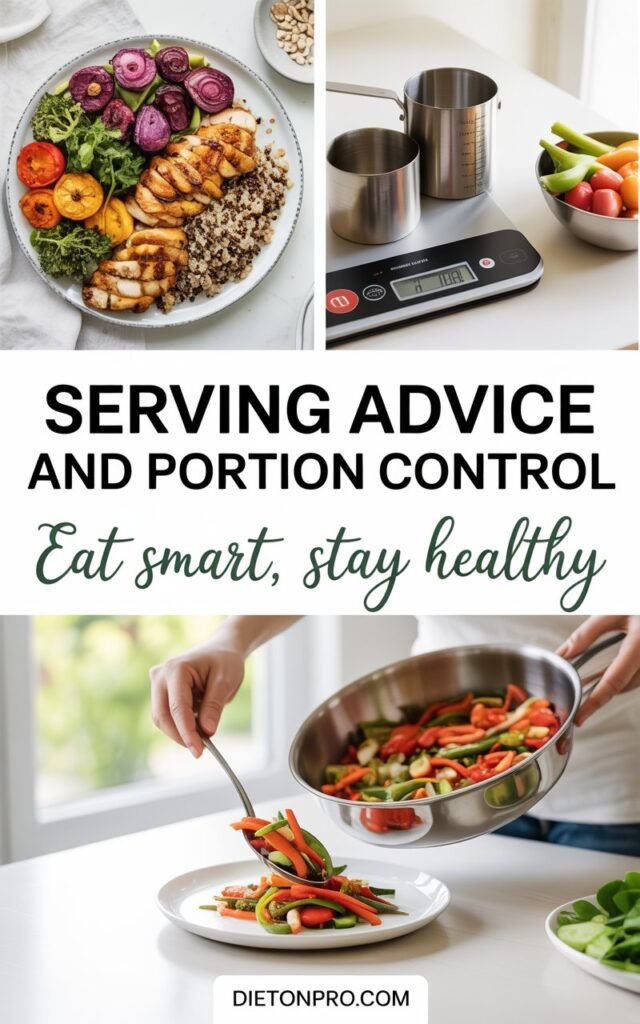
It keeps things tidy, reduces temptation to overfill, and makes the meal feel communal and casual.
When I serve sides like salads, roasted vegetables, or light grains, I usually portion them lightly on each plate and keep extra in the pan for refills.
This ensures no one takes too much at once and helps everyone enjoy a variety of flavors.
Eating slowly and savoring each bite is something I also practice; it gives the body time to signal fullness so you don’t accidentally overeat.
By following these serving patterns, I can enjoy a full, festive meal while staying mindful of my portions, keeping the holiday enjoyable and light.
Final Tips
The key to a stress-free and enjoyable Mediterranean Pan Christmas is simplicity and balance.
Focus on fresh ingredients, seasonal vegetables, and lean proteins, and let the natural flavors do the work.
Don’t overcomplicate things with too many pans or complicated sauces. Layer your ingredients thoughtfully, season well, and let everything roast together.
Remember to prep ahead whenever possible—chopping vegetables, seasoning proteins, and measuring grains saves time and keeps the process calm. Serve moderately, eat slowly, and enjoy each bite.
This approach allows you to have a festive, satisfying Christmas meal while staying in control and feeling good about what you eat.
Over the years, following this method has made my holidays lighter, more enjoyable, and full of real flavor without the post-meal slump.
FAQ
1. Can this meal plan be adapted for larger gatherings?
Absolutely. The one-pan approach scales well. Use multiple pans or a larger roasting tray to serve more people without extra stress.
2. Can I make these meals ahead of time?
Yes. Prep your vegetables, season proteins, and even partially cook grains a day ahead. Assemble and roast on Christmas day for maximum freshness.
3. Are these meals suitable for vegetarians?
Yes. You can swap proteins for tofu, tempeh, or beans while keeping the same Mediterranean flavors.
4. How do I make sure everything cooks evenly?
Layer ingredients by cooking time—proteins first, hard vegetables next, and soft vegetables last. Check occasionally and give the pan a gentle stir if needed.
5. Can I include these meals in a calorie-conscious or weight-maintenance plan?
Definitely.
The meals focus on lean proteins, vegetables, healthy fats, and moderate grains, making them filling, balanced, and easy to adjust to your goals.