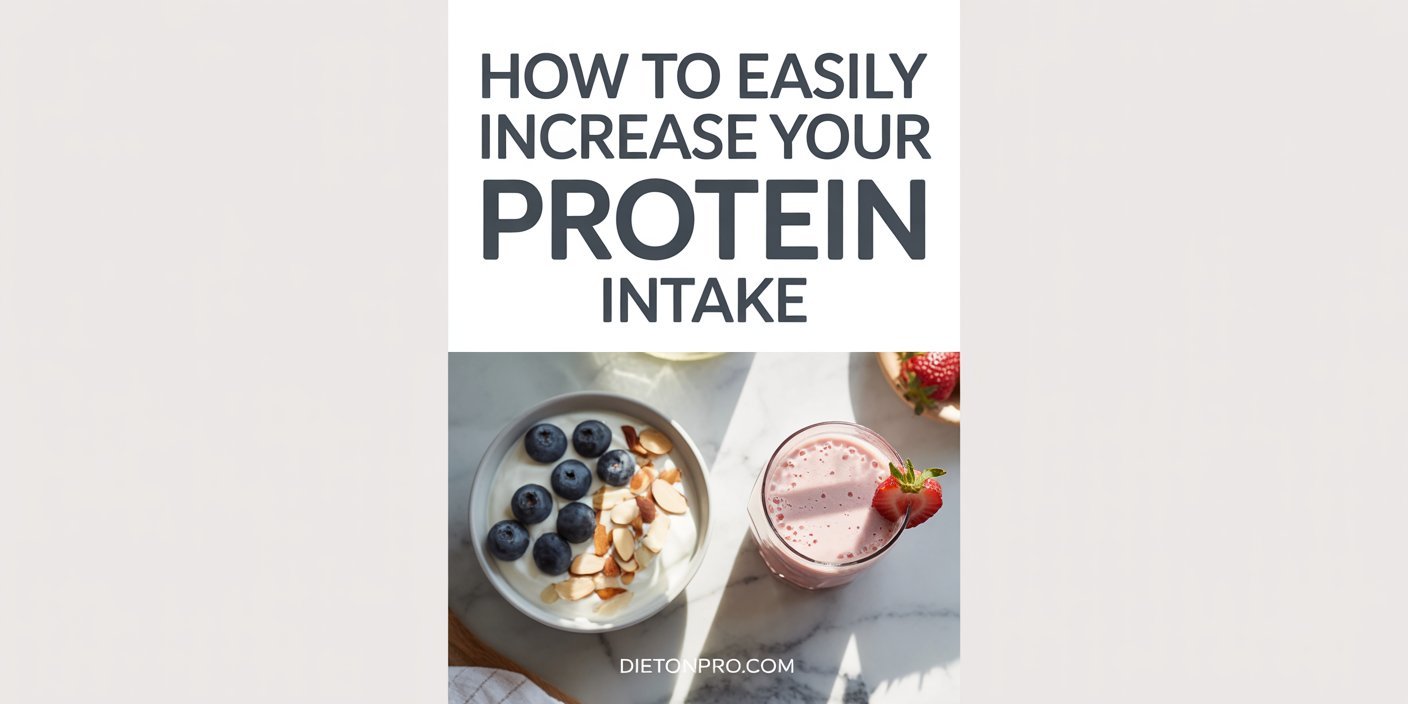

If you’re trying to eat more protein, you already know how tricky it can feel to move from 15 grams of protein to 30 grams of protein per meal—especially if you want to avoid relying solely on protein powders or overloading on meat several times a day.
In this guide, we’re breaking down exactly how to do it in a simple, sustainable, and science-backed way.
You’ll learn what to buy at the supermarket, how to layer plant and animal proteins, and the formula that can turn any meal into a satisfying, high-protein option.
Hi, I’m Dr. Danny, a medical doctor and nutritionist dedicated to helping you improve your health through food.
My approach isn’t anti-meat—in fact, animal protein has its benefits—but if you want to stay healthier for longer, the balance should shift toward plants.
Most of the protein in your diet should come from plant sources, with animal proteins acting as supportive additions.
Why? Because plant proteins offer so much more than just protein. They provide fiber (which is largely absent in animal proteins), plus important micronutrients and phytonutrients that help lower inflammation, improve cholesterol, support heart health, and contribute to longevity.
Research even shows that increasing your plant protein intake by just 3% can help reduce your risk of chronic disease.
Personally, I aim for about 70% of my protein from plant-based sources and 30% from animal-based. You can adjust this ratio to your preference, but shifting slightly toward plants brings huge benefits.
To make that easier, I use a simple system: every supermarket trip, I choose high-protein foods from three key areas—the fridge, freezer, and pantry.
1. High-Protein Foods From the Fridge Section
Dairy, Eggs, Lean Meats & Plant-Based Proteins
This is where most people start, and for good reason—many fridge staples are naturally high in protein and incredibly versatile.
Cheese: A Surprisingly Powerful Protein Source
Cheese varies widely in its protein content:
- Feta: ~15g protein per 100g
- Paneer or Parmesan: ~35g per 100g (very high!)
- Cottage cheese: ~9–10g per 100g
Cheese works beautifully folded into meals, added to sandwiches, or used as a protein-boosting topper.
Yogurt: Choose Strained, Plain, Probiotic-Rich Options
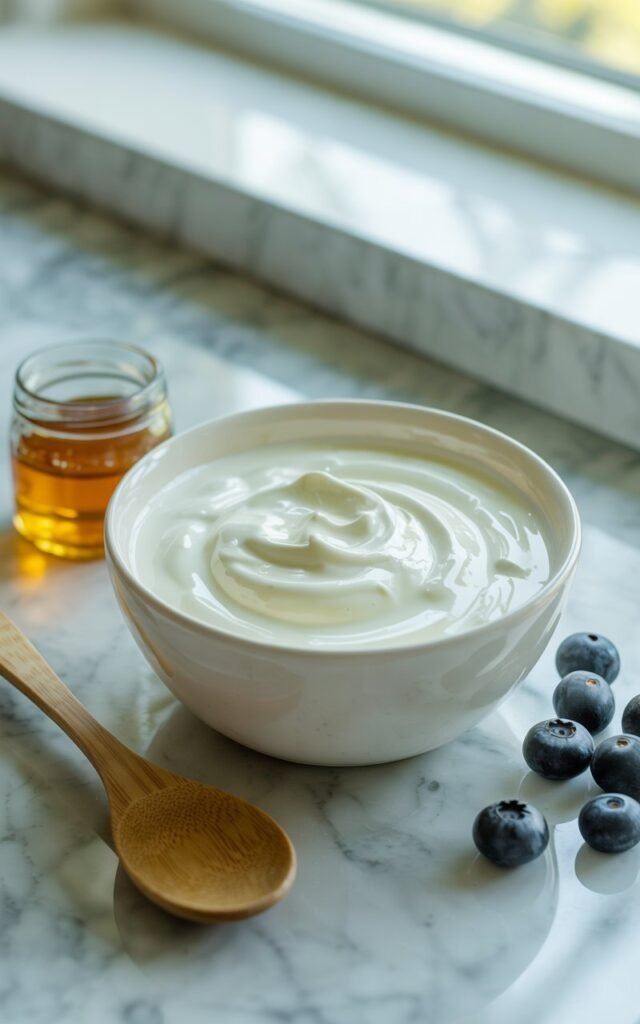
Look for Greek-style or authentic Greek yogurt—these typically contain 8–10 grams of protein per 100 grams. Kefir and fermented dairy products are also fantastic additions.
Contrary to old beliefs, fermented dairy isn’t harmful to heart health. Thanks to a natural milk fat globule membrane, many dairy fats are cardioprotective or at least cardio-neutral.
Always choose plain, unflavored options to avoid unnecessary sugars and additives.
Eggs: A Nutrient-Dense Classic
One medium cooked egg contains about 6 grams of protein. And we now know eggs aren’t harmful to heart health when eaten as part of a balanced diet.
You don’t need unlimited eggs daily—but they absolutely can be part of a healthy protein strategy.
Soy-Based Proteins: Tofu & Tempeh
- Tofu: Go for extra-firm—it’s easier to press, crumble, bake, and crisp.
- Tempeh: A standout option because it’s fermented, making it more gut-friendly and nutrient-dense.
Tempeh may take getting used to, but it’s incredibly versatile once you start cooking with it.
Lean Meats & Fish
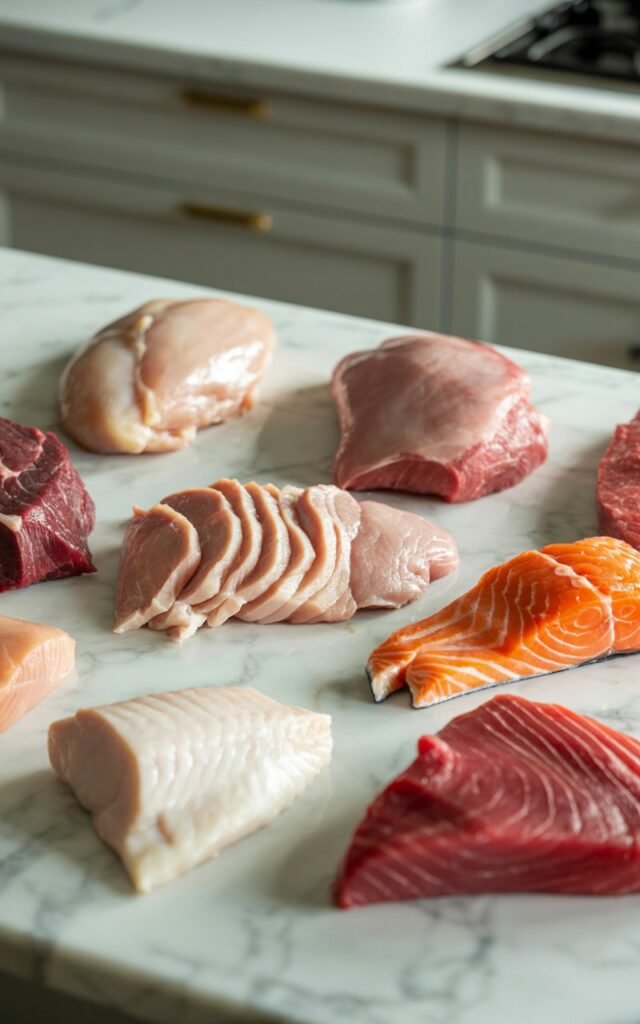
For meat eaters, choose lean cuts:
- Red meat: Rump or bavette instead of fatty ribeye
- Poultry: Skinless breast or thigh
- Fish: Oily fish like salmon, anchovies, sardines, and herring for omega-3 benefits, plus white fish like monkfish
Meat is technically “higher quality” protein due to a stronger amino acid profile, but it also tends to be higher in saturated fat and lower in fiber. That’s why balance matters.
Plant proteins may be lower in one or two amino acids, but when eaten together throughout the day, they help you hit total protein requirements with ease—no matter what dietary pattern you follow.
2. High-Protein Pantry Staples: Beans, Lentils, Nuts, Grains & More
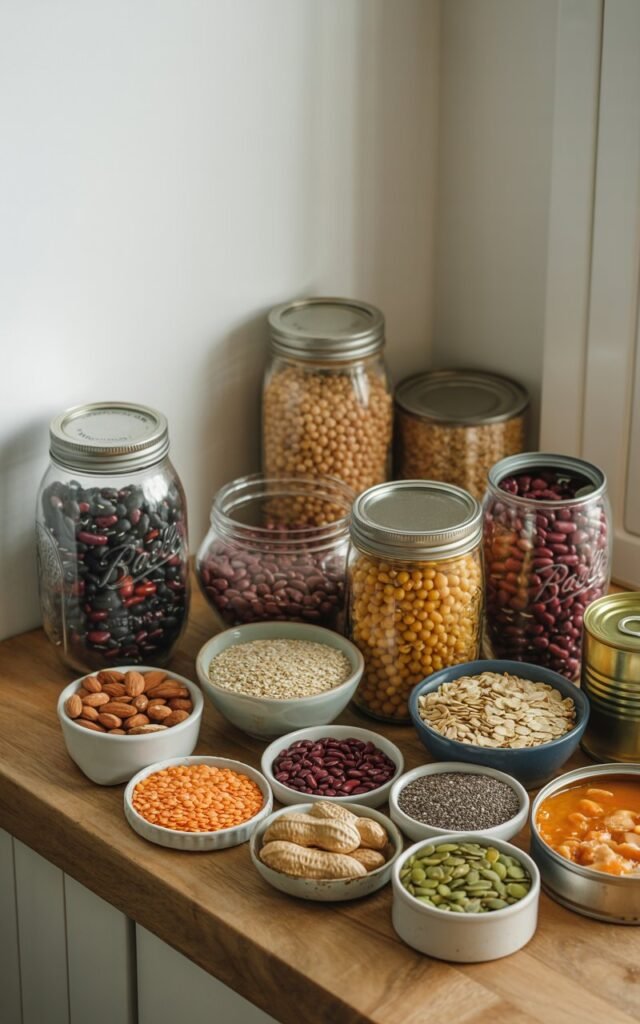
Beans & Lentils
Although praised as high-protein foods, cooked beans and lentils generally offer:
- 8–11 grams of protein per 100 grams cooked
To hit 30 grams of protein with beans alone, you’d need about 300 grams, which is a large amount and can overwhelm your gut. Instead, they work best layered with other protein sources.
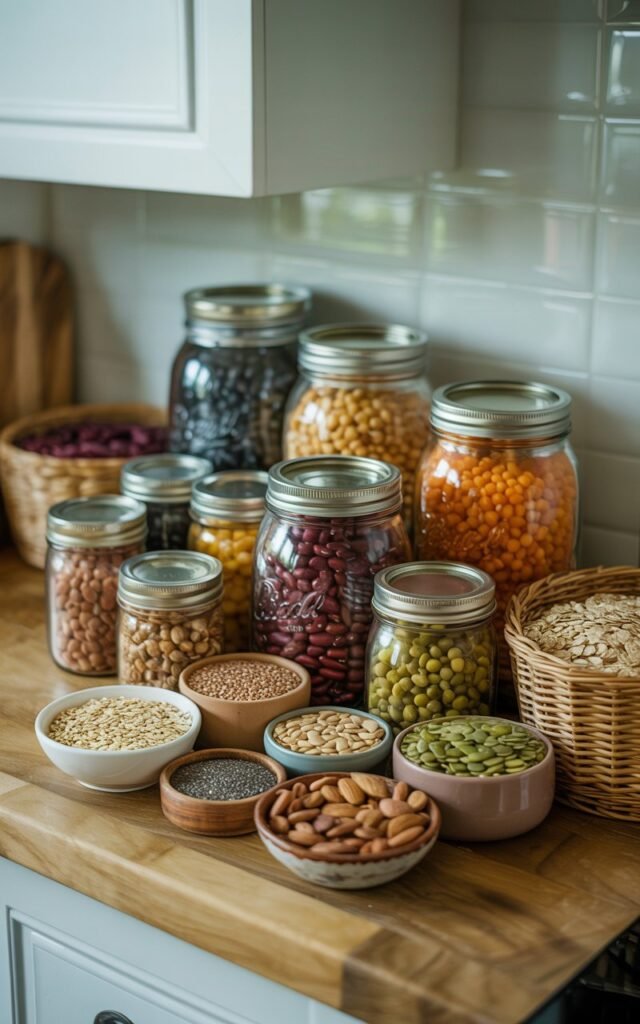
Nuts & Seeds
A handful of mixed nuts (30g) provides 6–8 grams of protein.
Highest protein nuts include:
- Peanuts
- Almonds
- Pistachios
Nuts and seeds make excellent snacks and protein toppers.
Grains
Most whole grains, such as rice, are low in protein (1–3g per 100g cooked).
But quinoa is a standout pseudo-grain, offering significantly more protein and serving as a fantastic addition to bowls, salads, and stews.
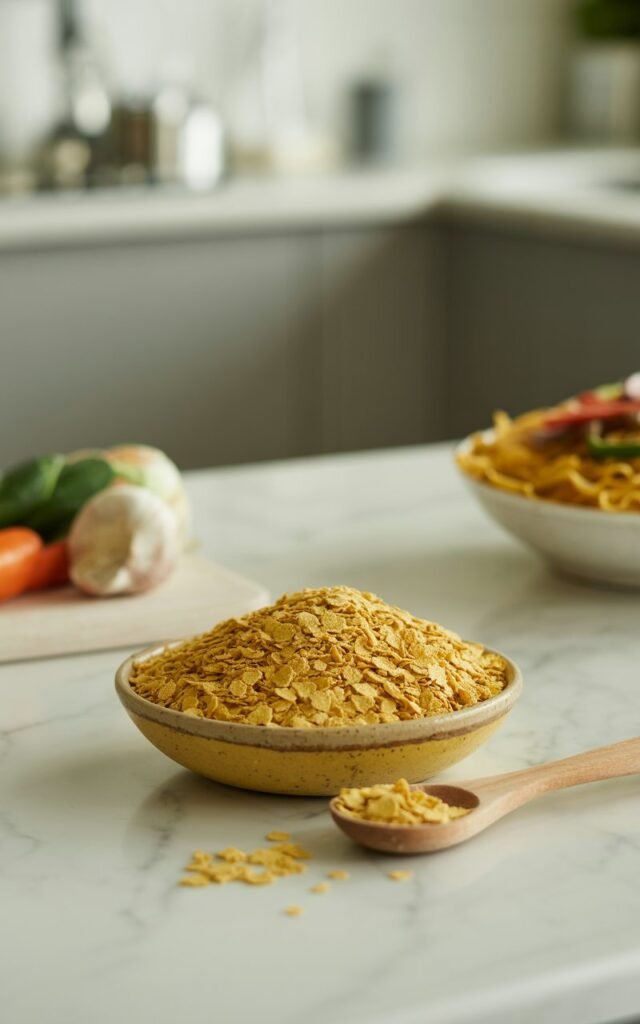
Nutritional Yeast: A Flavorful Protein Booster
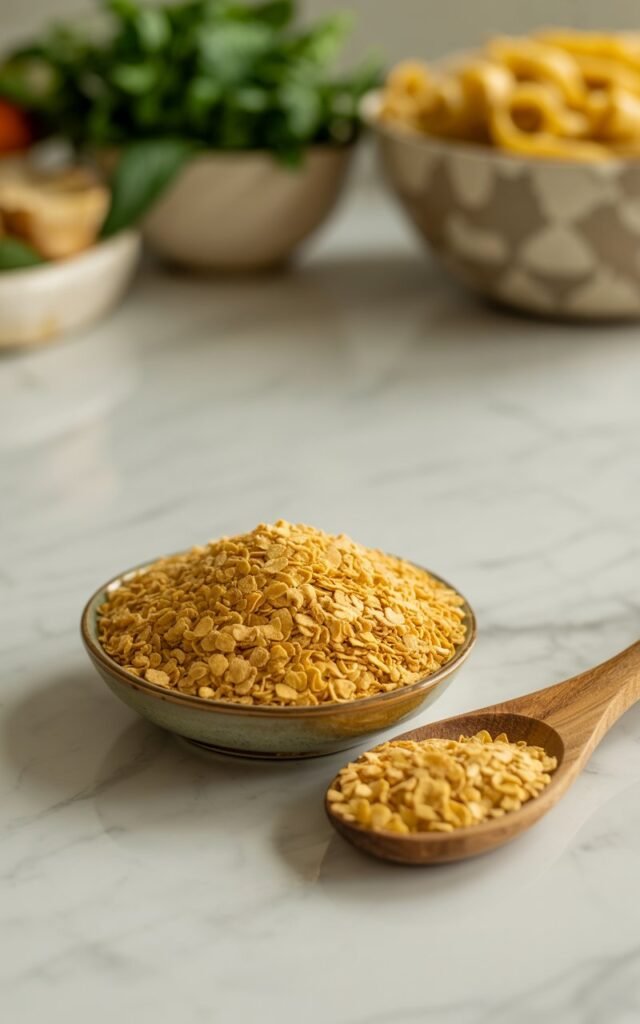
Nutritional yeast offers:
- 40–45 grams of protein per 100g
- A rich umami flavor
- Vitamin B12 (especially important for vegans)
Even small amounts dramatically boost flavor and protein.
Bean & Lentil Pasta
One of the easiest protein hacks. Lentil or chickpea pasta contains:
- ~22 grams of protein per 100 grams cooked
Compared to 6–8 grams in regular pasta, this is nearly triple the protein—and requires no extra effort.
3. High-Protein Frozen Foods: The Hidden Gems
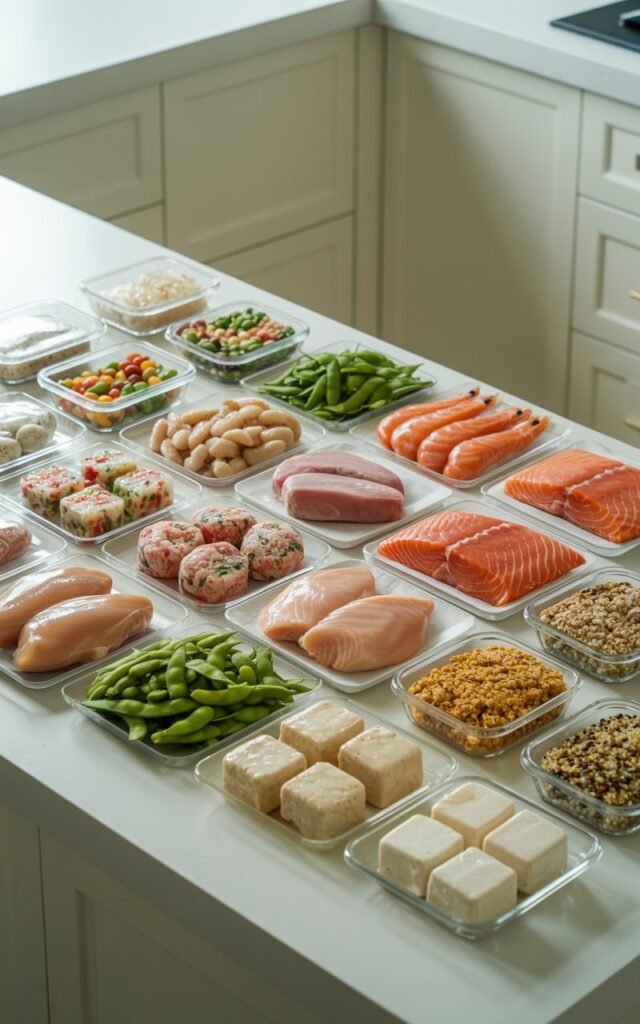
Most people overlook the freezer section, but it’s packed with convenient, high-protein items.
Edamame
A full 11 grams of protein per 100 grams
Perfect blended into dips or added to bowls for a major boost.
Broad Beans & Peas
Both contain around 6 grams of protein per 100 grams and are easy to add into soups, stews, stir-fries, or salads.
Frozen Fish
Freezer fish retains nutrients well and offers an easy way to keep high-quality protein on hand.
Understanding Protein Layering: The Formula for a High-Protein Meal
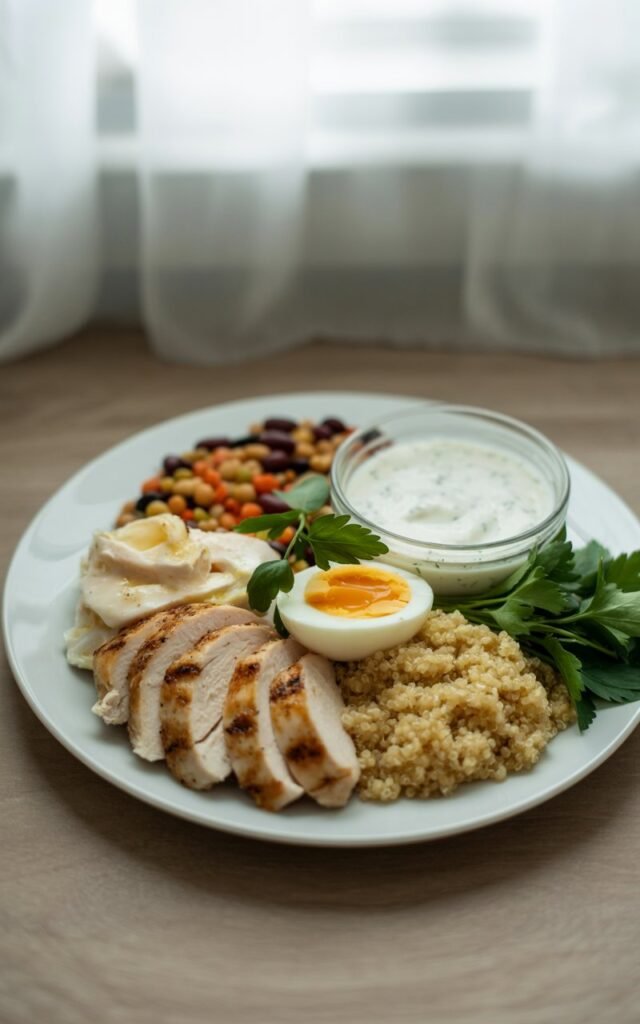
The key to building satisfying meals is something called protein layering—combining multiple protein sources rather than relying heavily on just one.
Step 1: Choose a Core Protein Source
Examples include:
- Lean meats
- Fish
- Eggs
- Tofu or tempeh
This is your base—providing the bulk of protein.
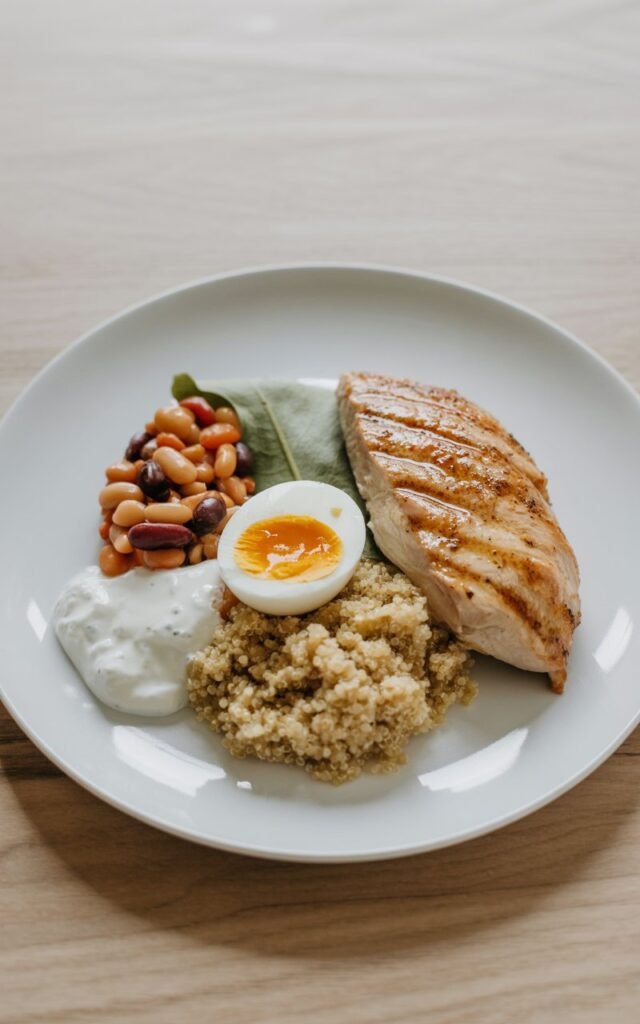
Step 2: Add a Plant-Based Protein Partner
Options:
- Lentils (puy, beluga, green)
- Chickpeas
- Black beans
Adding just 100 grams boosts your meal’s protein by roughly 8 grams.
Step 3: Finish with a Protein Topper
These add crunch, nutrients, and extra grams of protein:
- Pumpkin seeds
- Hemp seeds
- Almonds
- Peanuts
Bonus Layer: Flavor-Boosting Protein Sauces
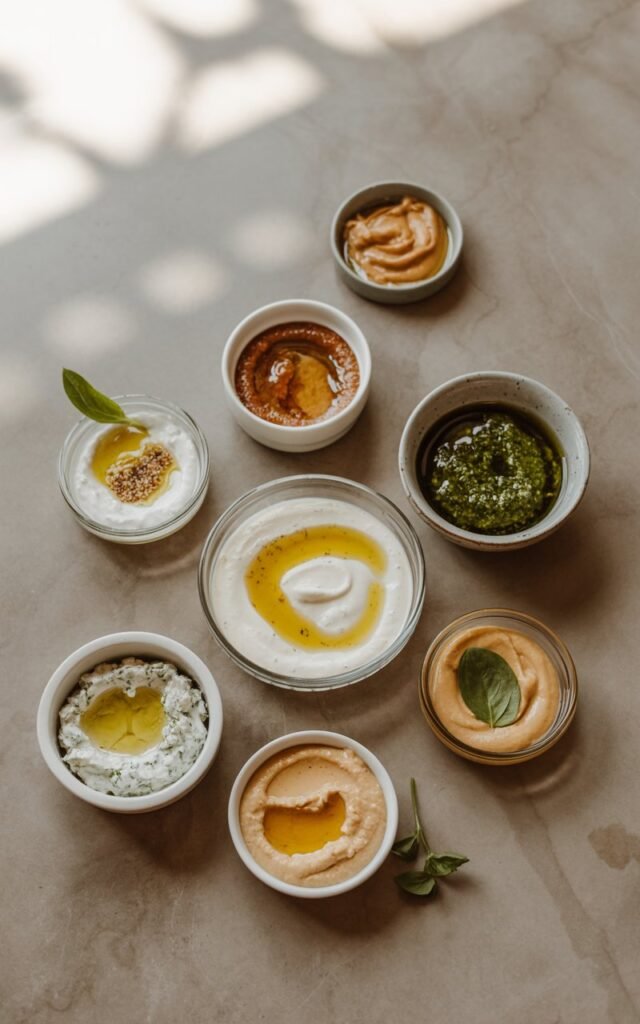
You can get creative here. Tahini (100% sesame paste) is an excellent plant protein—and works beautifully when thinned into a sauce.
For a unique twist, mix tahini with kimchi brine, a little salt, and hot water to create a tangy, fiery topping that adds even more nutrients and complexity.
Even 30–40 ml of this sauce boosts protein while transforming the flavor of your dish.